
Christian faith is simply the act of believing in Jesus Christ. Of course, we must specify what we mean by believe, what we mean by Jesus Christ, and how it is about believing. But it is not necessary, in order to understand what faith is and to believe de facto, to seek out mysterious explanations, to invent new meanings for words, or to exchange our rationality for some strange functionality.
1.Believing is receiving the revelation of God
Faith is at the heart of the Gospel, and the apostles who preached it spoke to their contemporaries, who could understand them in the language they commonly spoke: to the jailer who thought that Paul and Silas, imprisoned in Philippi, had escaped, and who, throwing himself at their feet, asked them what he had to do to be “saved”, they replied:
Believe on the Lord Jesus, and you will be saved, you and your household.
Book of Acts, Chapter 16, verse 31
But what should we believe, and how? If I am not distorting his thought, the Swiss theologian Karl Barth defined faith as a “receptivity to the self-revelation of God” (K.Barth, Dogmatics). And indeed, to believe in Jesus Christ is to believe for one’s salvation in who he is and in what he has done, that is, in the Gospel that was announced by the apostles, and recorded for us in the Scriptures:
1 Now I should remind you, brothers and sisters,[ of the good news that I proclaimed to you, which you in turn received, in which also you stand,
1st letter to the Corinthians, Chapter 15, verses 1-5
2 through which also you are being saved, if you hold firmly to the message that I proclaimed to you—unless you have come to believe in vain.
3 For I handed on to you as of first importance what I in turn had received: that Christ died for our sins in accordance with the scriptures,
4 and that he was buried, and that he was raised on the third day in accordance with the scriptures,
5 and that he appeared to Cephas, then to the twelve.
Here we find the pattern of faith, identified as “reception” of the Gospel, which is itself a revelation of the justice of God, on the very principle of faith:
16 I am not ashamed of the gospel; it is the power of God for salvation to everyone who has faith, to the Jew first and also to the Greek.
Letter to the Romans, Chapter 1, verses 16-17
17 For in it the righteousness of God is revealed through faith for faith; as it is written, ‘The one who is righteous will live by faith.’
Thus, to believe would be to receive the revelation of God, and Christian faith would be essentially and primarily to receive the revelation of God which is the Gospel that speaks to us of Jesus Christ, in order to interpret one’s own existence in accordance with this revelation, and to return to the knowledge of God, which is eternal life (John 17:3): by believing, the human being accesses redemption, and enters into the knowledge of God.
2 The case of Adam
2.1 Adam in the time of innocence
Did Adam, the first man according to Scripture, have faith while in Eden, or did he have the opportunity to show faith? According to our analysis, to answer this question we need to consider how Adam himself was confronted with God’s revelation. For, as with every man, God first made himself known to him through the spectacle of creation, which reveals God’s “eternal power and divinity”, as the apostle Paul teaches us in the book of Romans :
18 For the wrath of God is revealed from heaven against all ungodliness and wickedness of those who by their wickedness suppress the truth.
Epistle to the Romans, Chapter 1, verses 18-21
19 For what can be known about God is plain to them, because God has shown it to them.
20 Ever since the creation of the world his eternal power and divine nature, invisible though they are, have been understood and seen through the things he has made. So they are without excuse;
21 for though they knew God, they did not honour him as God or give thanks to him, but they became futile in their thinking, and their senseless minds were darkened.
But the book of Genesis also shows us that Adam, once placed in the Garden of Eden, is immediately faced with God’s explicit command:
15 The Lord God took the man and put him in the garden of Eden to till it and keep it.
Book of Genesis, Chapter 2, verses 15-17
16 And the Lord God commanded the man, ‘You may freely eat of every tree of the garden;
17 but of the tree of the knowledge of good and evil you shall not eat, for in the day that you eat of it you shall die.’
Thus, from the very beginning of his vocation, Adam was confronted with a double revelation from God: an “inner” revelation which reaches all men and which he himself possessed from the very first moment of his conscious life, and an “outer” revelation of God’s will, in the form of the first commandment, which here echoed what he knew in his heart (the seat of thought, not feelings, in the Bible), and which comes (a little) later in his existence.
In this situation, Adam was invited to take a position regarding God’s revelation: to receive it, i.e. to show faith in order to keep the knowledge of God and therefore the commandment, or to reject it, with the disastrous consequence announced in verse 17. Through the words spoken to Eve by the serpent, the rest of the story shows that it was the words of the devil that he chose to believe, rather than those of God: faced with God’s revelation in Eden, Adam did not show the faith he should have.
In general, since the beginning of the world man has never been without the universal revelation that reaches him through his perception of creation and his conscience, and from the Garden of Eden he was confronted with an explicit revelation in the form of a commandment. Then one had to put our faith in the Word of God to receive the commandment that led to eternal life, and today one still has to put one’s faith in Jesus Christ, by receiving the Gospel that leads to eternal life.
2.2 Adam in the age of alienation
If Adam is thus evoked as the father of the human race, his experience also serves as a paradigm for the human experience and condition in general. His relationship to universal revelation through conscience, taken up and applied to all men by the apostle in the epistle to the Romans, serves as a model for interpreting the situation of each man in relation to the knowledge of God: he possesses it in a certain way, and must respond to it by faith.
But Adam is also the archetype of man’s relationship with sin: the apostle Paul sums it up in the same epistle as follows:
12 Therefore, just as sin came into the world through one man, and death came through sin, and so death spread to all because all have sinned—
Epistle to the Romans, Chapter 5, verses 12-14
13 sin was indeed in the world before the law, but sin is not reckoned when there is no law.
14 Yet death exercised dominion from Adam to Moses, even over those whose sins were not like the transgression of Adam, who is a type of the one who was to come.
Adam (and Eve, taken from him) being the only man to have experienced life outside sin, he remains a man after the judgement pronounced on him for original sin: his relationship to revelation and faith remains essentially the same, and the example of him is the common lot of his descendants. Thus, we can read in the judgement pronounced by God against him in Chapter 3 of Genesis an additional revelation, at the end of which we can perhaps discern an act of faith on the part of the first man:
17 And to the man [the Lord God] said, ‘Because you have listened to the voice of your wife, and have eaten of the tree about which I commanded you, “You shall not eat of it”, cursed is the ground because of you; in toil you shall eat of it all the days of your life;
Book of Genesis, Chapter 3, verses 17-21
18 thorns and thistles it shall bring forth for you; and you shall eat the plants of the field.
19 By the sweat of your face you shall eat bread until you return to the ground, for out of it you were taken; you are dust, and to dust you shall return.’
20 The man named his wife Eve, because she was the mother of all who live.
21 And the Lord God made garments of skins for the man and for his wife, and clothed them.
This judgment echoes the commandment pronounced in Chapter 2, and reveals to Adam and Eve God’s anger at their transgression, as well as the condemnation to which it is subject and the future that will be their condition on earth from now on. Death is present, sealing the threat contained in the commandment, and yet Adam gives his wife the name “Living” – the meaning of the Hebrew חַוָּ֑ה, translated as “Eve”, and derived from the root חיה, “life” – against all that this judgment enunciates. Perhaps we should read this name, which in this context connotes hope, as an expression of faith in God himself, the source of life, and who promised that from Eve would be born the one (his “posterity”) who would defeat the enemy of humanity manifested through the deception of the serpent :
14 The Lord God said to the serpent, ‘Because you have done this, cursed are you among all animals and among all wild creatures; upon your belly you shall go, and dust you shall eat all the days of your life.
Book of Genesis, Chapter 3, verses 14-15
15 I will put enmity between you and the woman, and between your offspring and hers;
he will strike your head, and you will strike his heel.’
3 The case of Abraham
We have found in Scripture solid support for a conception of faith as “receptivity to God’s revelation”. However, it is also, and perhaps primarily, in God and in Jesus Christ, in their being or their person, that the men and women of the Bible believe or do not believe: why insist on revelation rather than on God as the object of faith? The idea we are proposing here is that God is given to us to know only through what he reveals to us about himself: we can therefore believe in him only through his self-revelation, so that believing in God and believing in his revelation are essentially the same thing. This is clearly shown by the “prototype” of the believer, Abraham, whose episode in the Book of Genesis serves as a model for Pauline theology of the Christian faith:
1 After these things the word of the Lord came to Abram in a vision, ‘Do not be afraid, Abram, I am your shield; your reward shall be very great.’
Book of Genesis, Chapter 15, verses 1-6
2 But Abram said, ‘O Lord God, what will you give me, for I continue childless, and the heir of my house is Eliezer of Damascus?’
3 And Abram said, ‘You have given me no offspring, and so a slave born in my house is to be my heir.’
4 But the word of the Lord came to him, ‘This man shall not be your heir; no one but your very own issue shall be your heir.’
5 He brought him outside and said, ‘Look towards heaven and count the stars, if you are able to count them.’ Then he said to him, ‘So shall your descendants be.’
6 And he believed the Lord; and the Lord reckoned it to him as righteousness.
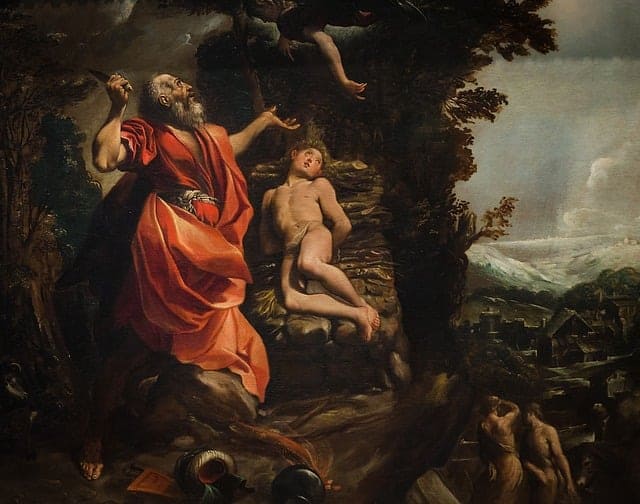
If Adam is the archetype of man’s relationship with sin, Abraham is indeed the archetype of man’s relationship with faith, and in this pivotal text we see the “father of believers” place his trust in the Lord, who reveals himself to him in a vision: here, trusting God and receiving revelation are one and the same thing. It is through this figure, common to the three great monotheisms, that we wish to examine man’s universal condition with regard to faith.
3.1 The Gospel and the knowledge of God
If faith is receptivity to God’s revelation of himself, the content of that revelation varies widely according to the place, time and circumstances of each individual’s existence. At the very least, according to Romans 2:18-21, every human being is touched by an immediate revelation from God, even if he or she cannot put words to this reality, which nevertheless affects him or her to the point of determining his or her path on earth. Indeed, the rejection of the most rudimentary knowledge of God, which in this case is akin to unbelief, leads to unfortunate consequences:
22 Claiming to be wise, they became fools;
Epistle to the Romans, Chapter 1, verses 22-25
23 and they exchanged the glory of the immortal God for images resembling a mortal human being or birds or four-footed animals or reptiles.
24 Therefore God gave them up in the lusts of their hearts to impurity, to the degrading of their bodies among themselves,
25 because they exchanged the truth about God for a lie and worshipped and served the creature rather than the Creator, who is blessed for ever! Amen.
If those who have not worshipped the Creator have “turned the truth into a lie”, it is because they have known this one and that one, and have rejected them. Yet the essence of God’s will is indelibly imprinted on the conscience of every man, so that no man is without some form of “natural” law:
14 When Gentiles, who do not possess the law, do instinctively what the law requires, these, though not having the law, are a law to themselves.
Epistle to the Romans, Chapter 2, verses 14-16
15 They show that what the law requires is written on their hearts, to which their own conscience also bears witness; and their conflicting thoughts will accuse or perhaps excuse them
16 on the day when, according to my gospel, God, through Jesus Christ, will judge the secret thoughts of all.
So the Gospel looks beyond the universal proclamation of salvation through faith in Jesus Christ: it addresses the reaction of every person to God’s revelation, in other words the problem of faith in every possible circumstance.
3.2 The example of Abraham
This is perhaps why the model given to all Christians for justification by faith is the figure of Abraham, who knew nothing a priori about Jesus Christ, at least not in the full form of the apostolic Gospel. But Abraham too was justified by faith, because the same principle is at work independently of the content of the revelation addressed to each person:
3 For what does the scripture say? ‘Abraham believed God, and it was reckoned to him as righteousness.’
Epistle to the Romans, Chapter 4, verses 3-5
4 Now to one who works, wages are not reckoned as a gift but as something due.
5 But to one who without works trusts him who justifies the ungodly, such faith is reckoned as righteousness.
Abraham thus acts as a middle ground between the condition of Adam and that of men who hear the Gospel: like Adam, he received a further revelation from God, and he is a model of faith in that he believed, and like Christians he received the gift of righteousness because of his faith, even though he did not know the Gospel.
For the same principle, stated here, is universally true: “to him who believes in him who justifies the ungodly, his faith is counted for righteousness” (Romans 4:5), i.e. faith is “counted” as a criterion of righteousness. This principle is applied here directly to Abraham, as it is to Christians, and therefore independently of the content of what is revealed to the believer. Now, since God has left no man without a revelation of himself and his will, neither has he left any without a revelation of his goodness and mercy, which in itself should be enough to provoke repentance in all:
3 Do you imagine, whoever you are, that when you judge those who do such things and yet do them yourself, you will escape the judgement of God?
Epistle to the Romans, Chapter 2, verses 3-4
4 Or do you despise the riches of his kindness and forbearance and patience? Do you not realize that God’s kindness is meant to lead you to repentance?
So everyone can believe in him, wherever they are, whenever they live, and whatever their condition. The example of Abraham shows us that, whatever the place or time, all men are the same and must turn to God in repentance, which is the fruit of faith, that is, the reception of the revelation that the Creator has given them of himself.
0 Comments